

2025-2026 Leadership Learning Report
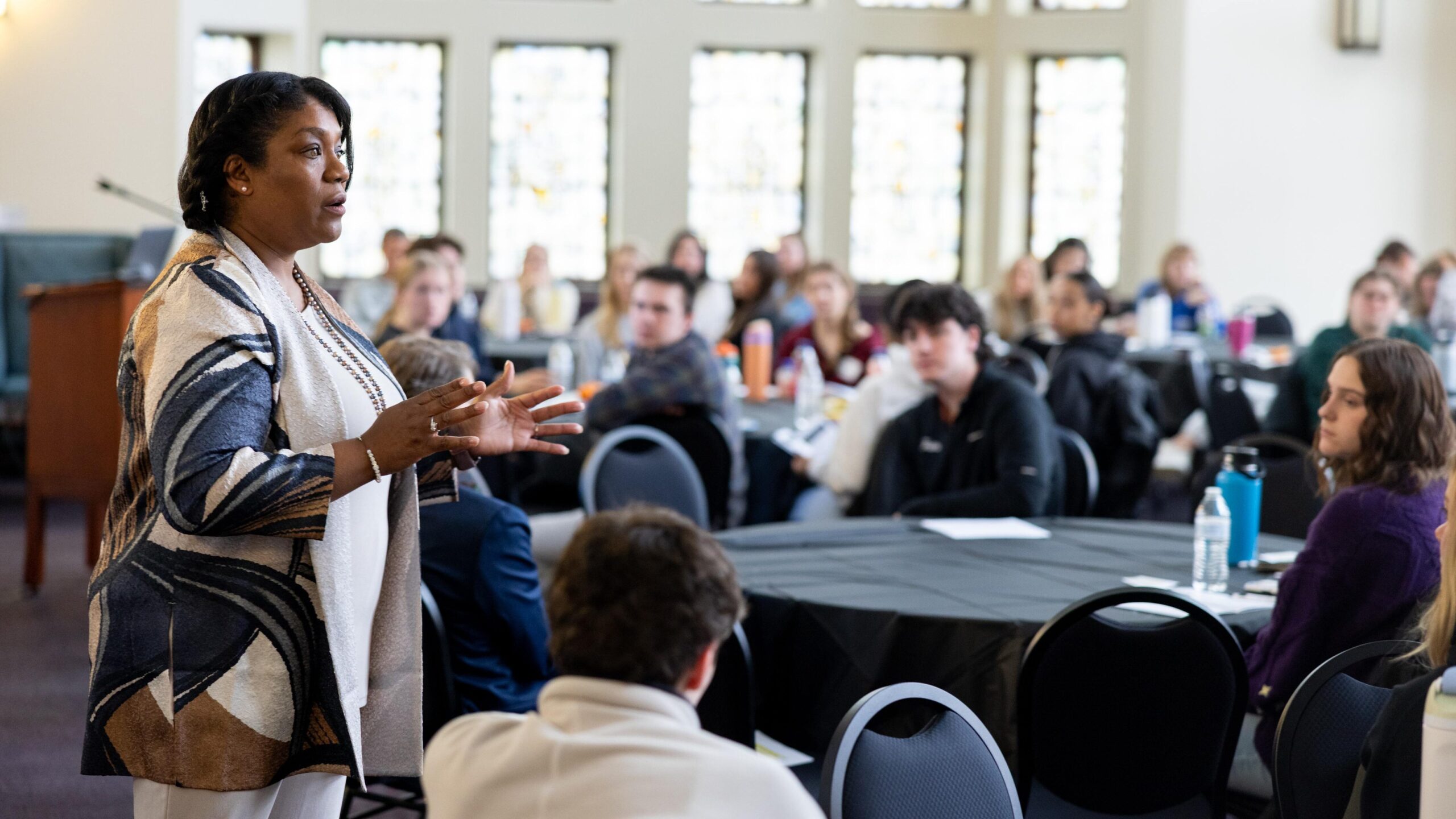
It gave me time and space to really reflect on who I am at my core, and where I want to go. It helped me learn what I am passionate about and how I want to lead.
Student perspective on the leadership fellows program
In alignment with the PC Path, the Division of Student Affairs has designed an intentional process of measuring student learning within leadership programs. This report provides a detailed look into the findings that came from the 2025-2026 academic year, the pilot year of data collection.
In this report:
- An overview of the leadership curriculum, including our shared definition of leadership, the seven learning outcomes that inform programming, and a list of programs offered.
- A summary of perceived and demonstrated student learning. This shows that participants in leadership programs developed 37 skills.
- A breakdown of student learning by leadership role. This shows consistent learning occurred across all roles.
- An explanation of student learning by learning outcome. This shows that all seven learning outcomes were achieved at a high rate.
Student Affairs Leadership Curriculum
Guided by the PC Path and the Leadership & Experiential Engagement pillar, the Division of Student Affairs takes a co-curricular approach to leadership development that helps students identify and cultivate their God-given talents, grow as values-based leaders, and prepare for lives of purpose and impact. The Leadership Curriculum outlines our leadership definition, learning outcomes, and developmental program tiers.
Student Affairs Leadership Definition
The Division of Student Affairs guides students in the pursuit of truth so they may lead impactful lives through their vocation and within their communities at Providence College and beyond.
We define leadership as:
- Values-Based: leaders discern and apply their personal values in decision making
- Service-Oriented: leaders embody self-sacrifice while exercising their influence to serve the needs of others
- Inclusive-Minded: leaders honor those they are leading with dignity and respect while creating communities of belonging
- Strengths-Focused: leaders cooperate with God’s grace to hone their unique talents which help provide direction for themselves and others
Leadership Learning Outcomes
We believe all students are called to be leaders at Providence College and beyond. Students who engage in leadership development will:
- Hone interpersonal communication skills
- Discern and apply personal values in decision-making
- Establish and facilitate communities of belonging
- Gain an understanding of their Clifton Strengths
- Learn conflict resolution skills
- Craft strategies for ongoing self-reflection
- Identify opportunities to empower others to succeed
Leadership Design
Leadership development is an on-going process that should be crafted by the individual to fit their personal interests and goals. We encourage students to begin engaging with programs during their first year at Providence College, but it is never too late to start your leadership journey.
- Tier 1 Leadership Programs allow students to explore foundational leadership concepts
- Tier 2 Leadership Programs allow students to hone leadership skills through practice
- Tier 3 Leadership Programs allow students to apply leadership skills in high impact experiences
Leadership tiers are designed in coordination with the PC Path-a holistic, scaffolded student learning and development program facilitated by the Division of Student Affairs. The tiers are non-linear; students are encouraged to engage with programs that fit their needs, interests and goals rather than prioritizing a direct progression through each tier.
Leadership Programs
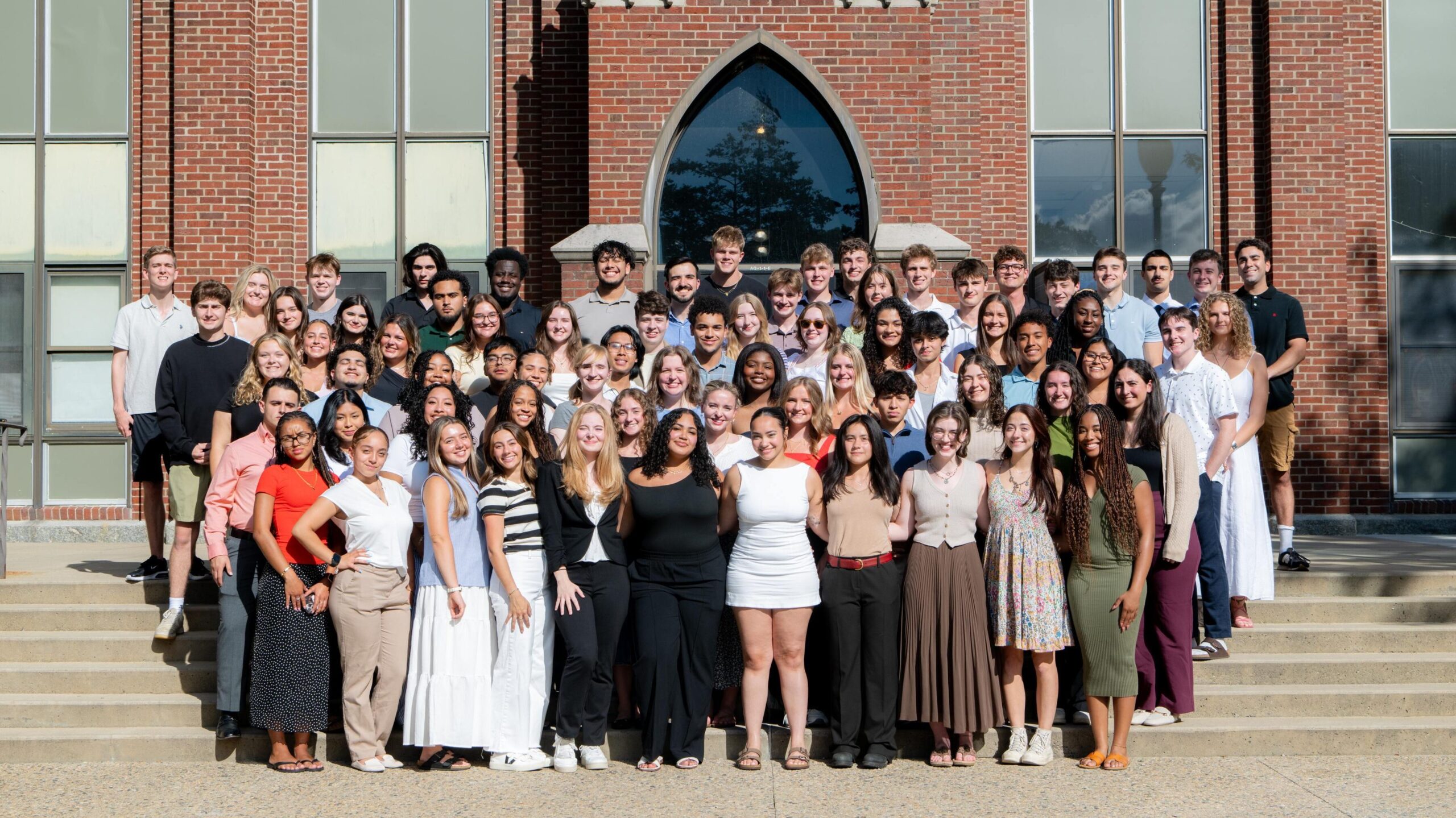
The Division of Student Affairs facilitates twenty-six leadership roles. Students are supervised, advised, coached, and mentored by over two dozen staff within four departments.
The 2025-2026 academic calendar was a pilot year for the Leadership Curriculum and collection of data related to student learning. Eight programs participated in the pilot: Board of Programmers (BOP) member, BOP Executive Board member, Emerging Leaders participant, Fall Orientation Leader, Head Resident Assistant (HRA), Horizons Mentor, Leadership Fellows Program (LFP) Companion, LFP Fellow.
| Leadership Program | Design | Office |
|---|---|---|
| Emerging Leaders Participant* | Tier 1 – Explore | SEAL |
| Leadership Fellows Program Fellow* | Tier 1 – Explore | SEAL |
| Rhode Island Conference on Values Based Leadership Participant | Tier 1 – Explore | SEAL |
| Transformations Retreat Participant | Tier 1 – Explore | SEAL |
| Board of Programmers Member* | Tier 2 – Practice | SEAL |
| Club Sports Executive Board Member | Tier 2 – Practice | Rec Sports |
| Cowl Editorial Staff | Tier 2 – Practice | Dean of Students |
| Fall Orientation Leader* | Tier 2 – Practice | SEAL |
| FRAME Leader | Tier 2 – Practice | SEAL |
| Group Fitness Instructor | Tier 2 – Practice | Rec Sports |
| Horizons Mentor* | Tier 2 – Practice | SEAL |
| Intramural Athletic Board Member | Tier 2 – Practice | Rec Sports |
| Leadership Fellows Program Companion* | Tier 2 – Practice | SEAL |
| PC Firsts Coordinator | Tier 2 – Practice | SEAL |
| Resident Assistant | Tier 2 – Practice | Residence Life |
| Senior Week Core Member | Tier 2 – Practice | SEAL |
| SRW Core Member | Tier 2 – Practice | SEAL |
| Summer Orientation Leader | Tier 2 – Practice | SEAL |
| Urban Action Leader | Tier 2 – Practice | SEAL |
| Board of Multicultural Student Affairs Executive Board Member | Tier 3 – Apply | SEAL |
| Board of Programmers Executive Board Member* | Tier 3 – Apply | SEAL |
| Head Resident Assistant* | Tier 3 – Apply | Residence Life |
| Orientation Coordinator | Tier 3 – Apply | SEAL |
| Urban Action Coordinator | Tier 3 – Apply | SEAL |
Student Learning Summary
Student learning is measured annually through a pre and post, mixed method assessment framework. Each program has a unique assessment that measures perceived and demonstrated learning. A summary of findings from the 2025-2026 academic year is detailed in this section.
Measuring Leadership Learning
Student Affairs staff are engaged in ongoing measurement of their leadership programs to ensure that student learning is occurring.
Staff outline 4-6 skills that students will develop through participation in their program. Those skills are unique to the goals of the program. Each skill directly relates to one Leadership Curriculum learning outcome. The skills from each program relate to at least two learning outcomes.
Student learning is measured annually through a pre and post, mixed method assessment framework. Each program has a unique assessment that measures perceived and demonstrated learning. Students were distributed a survey that they complete electronically. As part of the pilot, one group, BOP Executive Board members, were interviewed and their responses were submitted by their advisors. 283 unique responses were collected.
Perceived learning is measured by asking students to indicate their confidence in each skill their program intends for them to develop. These questions use a five-point Likert scale. The students are asked to do this just before they begin their leadership experience and again at the end.
Demonstrated learning is measured during the post assessment by asking students to submit a qualitative description of how they used each intended skill during their leadership role. That response receives a yes/no grading based on their ability to clearly articulate how they used the skill during their leadership role.
Perceived Student Learning
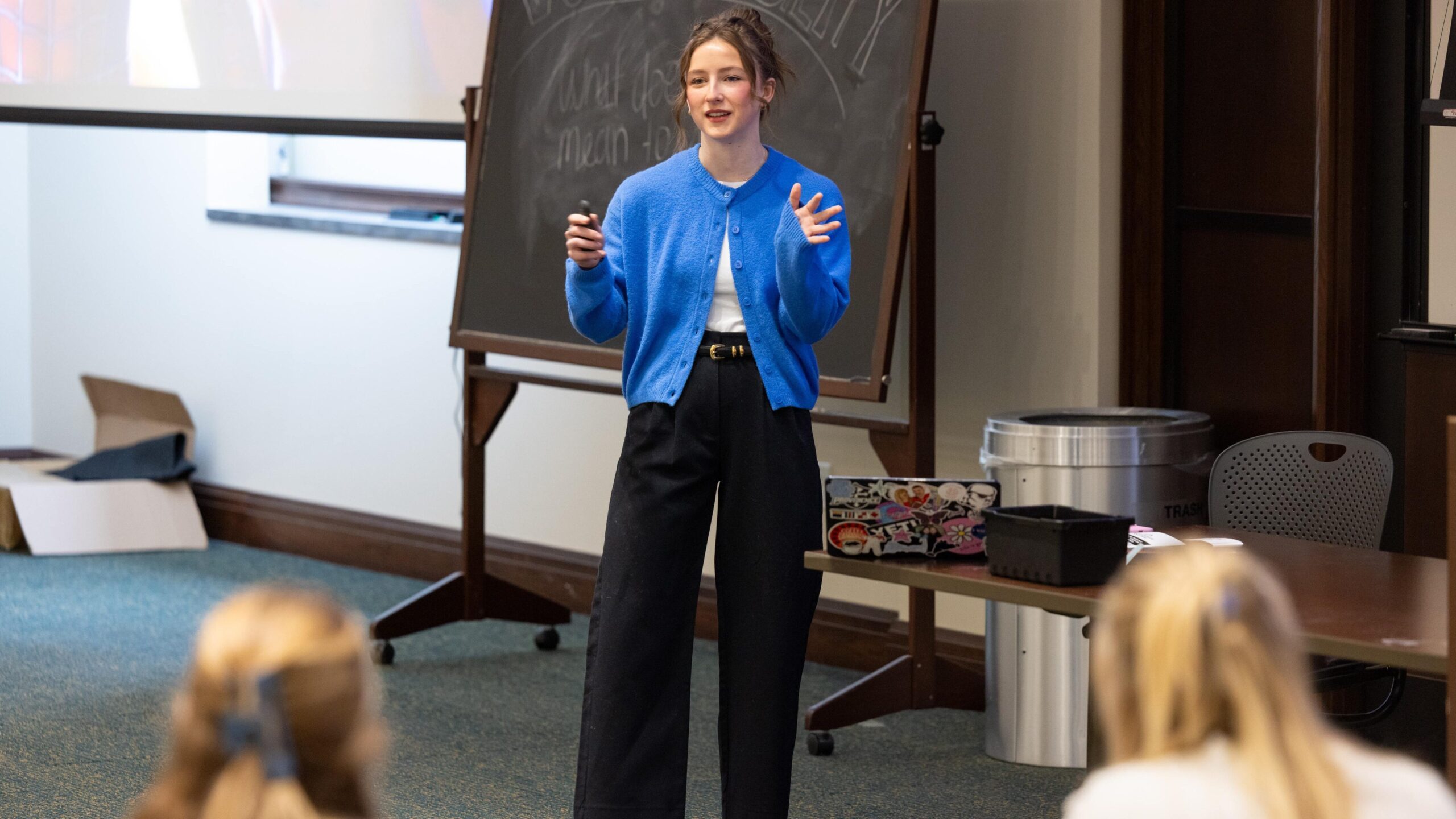
Perceived learning is measured by asking students to indicate their confidence in each skill their program intends for them to develop. These questions use a five-point Likert scale.
| Skill | Learning Outcome | Role | Pre | Post | Change | |||
|---|---|---|---|---|---|---|---|---|
| Explore individual passions and life purpose | Craft strategies for ongoing self-reflection | LFP Fellow | 3.34 | 4.4 | 1.1 | |||
| Display vulnerability through authentic dialogue | Hone interpersonal communication skills | LFP Fellow | 3.1 | 4.13 | 1 | |||
| Engage in active and empathetic listening | Establish and facilitate communities of belonging | LFP Fellow | 3.88 | 4.67 | 0.72 | |||
| Display leadership outside of positions of authority | Discern and apply personal values in decision-making | LFP Fellow | 3.64 | 4.53 | 0.89 | |||
| Provide on-going, individualized guidance to members of the Board of Programmers (BOP) | Identify opportunities to empower others to succeed | BOP Exec | 3.5 | 4.3 | 0.8 | |||
| Facilitate organized and impactful BOP meetings | Hone interpersonal communication skills | BOP Exec | 3.25 | 4.7 | 1.45 | |||
| Give members of BOP actionable feedback on their programming | Hone interpersonal communication skills | BOP Exec | 3.25 | 3.7 | 0.45 | |||
| Hold members of BOP accountable for facilitating their events and attending the events of other members | Learn conflict resolution skills | BOP Exec | 3.25 | 3.7 | 0.45 | |||
| Develop and communicate vision for BOP | Discern and apply personal values in decision-making | BOP Exec | 3.5 | 4.3 | 0.8 | |||
| Implement an effective timeline to market, order supplies, and stay on budget for events | Hone interpersonal communication skills | BOP Member | 3.98 | 4.29 | 0.31 | |||
| Provide clear direction for BOP members and staff during events you are facilitating | Hone interpersonal communication skills | BOP Member | 4.05 | 4.24 | 0.19 | |||
| Adapt facilitation of an event when challenges occur | Learn conflict resolution skills | BOP Member | 3.95 | 4.14 | 0.19 | |||
| Take feedback from BOP exec, committee chair and PC students to provide creative and timely programs that match student interest | Hone interpersonal communication skills | BOP Member | 4.14 | 4.19 | 0.05 | |||
| Work as a collaborative member of a committee and all of BOP to ensure the success of committee events and large-scale programs | Identify opportunities to empower others to succeed | BOP Member | 4.29 | 4.33 | 0.04 | |||
| Identify and define personal values. | Craft strategies for ongoing self-reflection | Emerging Leaders | 3.78 | 4.31 | 0.53 | |||
| Use tools to effectively solve a problem. | Learn conflict resolution skills | Emerging Leaders | 3.7 | 4.07 | 0.37 | |||
| Use communication skills to effectively solve a problem. | Hone interpersonal communication skills | Emerging Leaders | 3.85 | 4.17 | 0.32 | |||
| Reflect on the strengths and weaknesses of your personal approach to taking risks. | Learn conflict resolution skills | Emerging Leaders | 3.5 | 4.26 | 0.76 | |||
| Understand what steps can be taken to resolve a conflict. | Learn conflict resolution skills | Emerging Leaders | 3.63 | 4.28 | 0.65 | |||
| Identify your self-care values and how they support your resiliency. | Craft strategies for ongoing self-reflection | Emerging Leaders | 3.76 | 4.26 | 0.5 | |||
| Facilitate impactful small group conversations | Hone interpersonal communication skills | Fall Orientation Leader | 3.87 | 4.27 | 0.4 | |||
| Connect new students to PC resources | Identify opportunities to empower others to succeed | Fall Orientation Leader | 3.89 | 4.37 | 0.48 | |||
| Understand experiences & perspectives of others | Establish and facilitate communities of belonging | Fall Orientation Leader | 4.15 | 4.42 | 0.27 | |||
| Identify how to utilize their Clifton Strengths | Gain an understanding of their Clifton Strengths | Fall Orientation Leader | 3.18 | 3.99 | 0.81 | |||
| Be adaptable in a fast-paced environment | Learn conflict resolution skills | Fall Orientation Leader | 4 | 4.34 | 0.34 | |||
| Collaborate with campus partners and peers to provide campus-wide educational programming | Establish and facilitate communities of belonging | Head Resident Assistant | 3.56 | 3.67 | 0.11 | |||
| Provide training and on-going guidance to Resident Assistants (RA) | Identify opportunities to empower others to succeed | Head Resident Assistant | 4.11 | 4.44 | 0.33 | |||
| Provide programming that meets the unique needs of assigned residents | Establish and facilitate communities of belonging | Head Resident Assistant | 3.56 | 4.11 | 0.55 | |||
| Manage Resident Assistant (RA) staff dynamics | Learn conflict resolution skills | Head Resident Assistant | 3.78 | 4.56 | 0.78 | |||
| Advocate for the needs of residents and Resident Assistants (RA) to Residence Life professional staff | Hone interpersonal communication skills | Head Resident Assistant | 4.11 | 4.33 | 0.22 | |||
| Engage in ongoing reflection around identity and personal values | Establish and facilitate communities of belonging | Horizons Mentor | 4.35 | 4.17 | -0.18 | |||
| Engage in active and empathetic listening | Hone interpersonal communication skills | Horizons Mentor | 4.59 | 4.67 | 0.08 | |||
| Identify resources and practical solutions to challenges mentee is facing | Learn conflict resolution skills | Horizons Mentor | 4.29 | 4.33 | 0.04 | |||
| Connect mentee with leadership/engagement opportunities that fit their strengths and interests | Identify opportunities to empower others to succeed | Horizons Mentor | 4.35 | 4.67 | 0.32 | |||
| Facilitate small group discussion that leads to vulnerable and authentic dialogue | Establish and facilitate communities of belonging | LFP Companion | 3.57 | 4.17 | 0.6 | |||
| Understand and utilize Clifton Strengths | Gain an understanding of their Clifton Strengths | LFP Companion | 3.57 | 4 | 0.43 | |||
| Engage in ongoing reflection around your personal values and life purpose | Craft strategies for ongoing self-reflection | LFP Companion | 4 | 4 | 0 | |||
| Facilitate an impactful leadership-related workshop | Hone interpersonal communication skills | LFP Companion | 3.5 | 3.8 | 0.3 | |||
Student learning occurred in all eight of the leadership roles. Student learning was demonstrated in 37 of the 38 skills measured across the eight leadership roles. 20 of the skills improved more than 0.4 from pre to post, a significant improvement. 31 of the skills measured 4.0 or higher in the post assessment, meaning students reporting feeling “very good” about their ability to execute the skill.
Demonstrated Student Learning
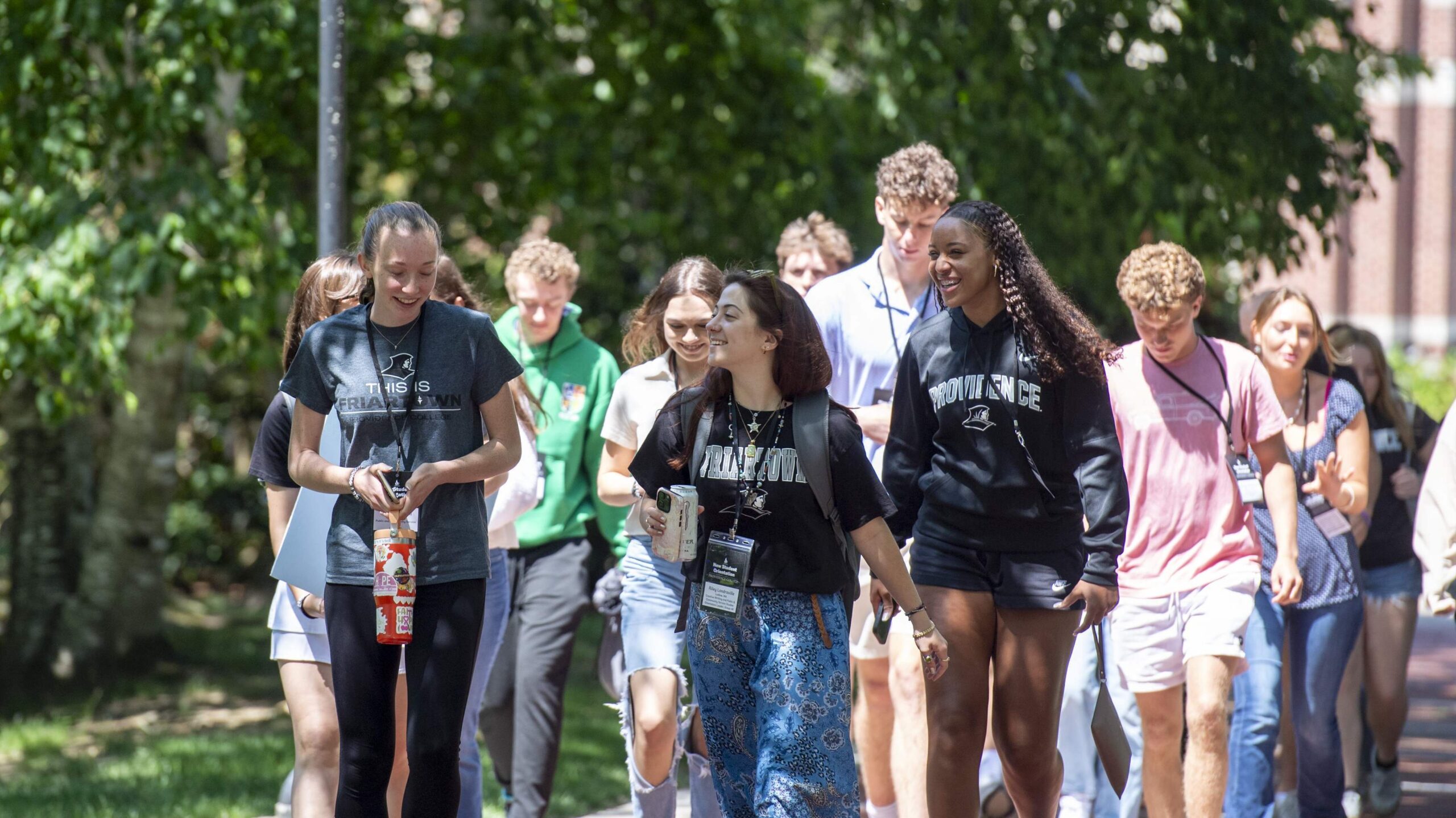
Demonstrated learning is measured by asking students to provide an open-ended responses. Students are prompted to provide an explanation of how they used the skill during their leadership experience. The answers are scored as either “demonstrates skill” or “does not demonstrate skill”. Answers are scored as “demonstrates skill” if they were able to appropriately describe using the skill to complete a task, execute a responsibility, implement a process, or meaningful engage with others as part of their role.
| Skill | Learning Outcome | Role | % Demonstrated | ||||||
|---|---|---|---|---|---|---|---|---|---|
| Explore individual passions and life purpose | Craft strategies for ongoing self-reflection | LFP Fellow | 97% | ||||||
| Display vulnerability through authentic dialogue | Hone interpersonal communication skills | LFP Fellow | 100% | ||||||
| Engage in active and empathetic listening | Establish and facilitate communities of belonging | LFP Fellow | 93% | ||||||
| Display leadership outside of positions of authority | Discern and apply personal values in decision-making | LFP Fellow | 80% | ||||||
| Provide on-going, individualized guidance to members of the Board of Programmers (BOP) | Identify opportunities to empower others to succeed | BOP Exec | 100% | ||||||
| Facilitate organized and impactful BOP meetings | Hone interpersonal communication skills | BOP Exec | 100% | ||||||
| Give members of BOP actionable feedback on their programming | Hone interpersonal communication skills | BOP Exec | 100% | ||||||
| Hold members of BOP accountable for facilitating their events and attending the events of other members | Learn conflict resolution skills | BOP Exec | 67% | ||||||
| Develop and communicate vision for BOP | Discern and apply personal values in decision-making | BOP Exec | 100% | ||||||
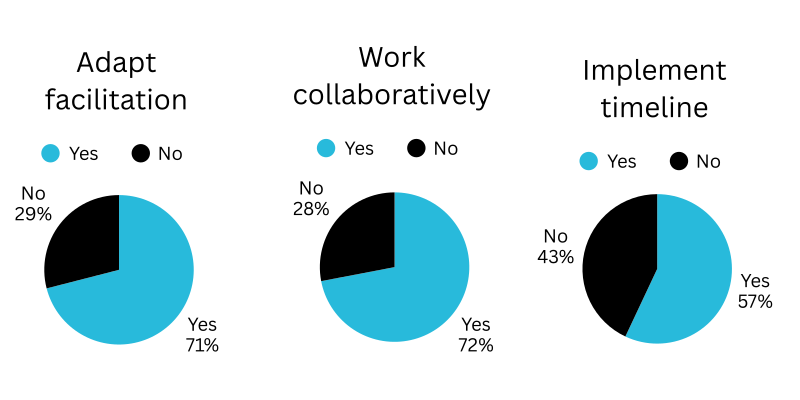
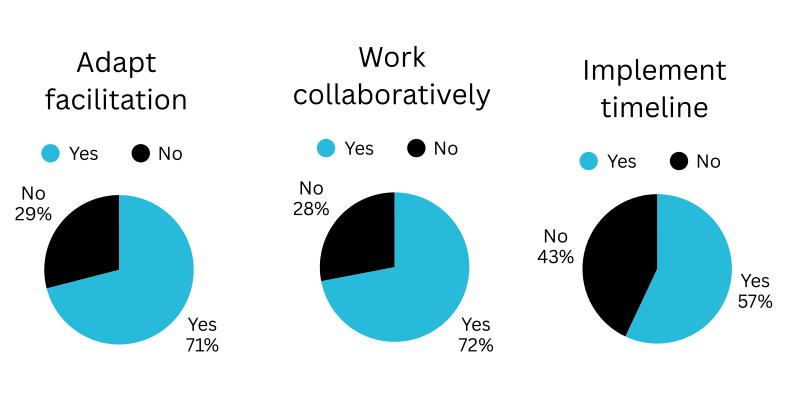
| Implement an effective timeline to market, order supplies, and stay on budget for events | Hone interpersonal communication skills | BOP Member | 57% | ||||||
| Provide clear direction for BOP members and staff during events you are facilitating | Hone interpersonal communication skills | BOP Member | 67% | ||||||
| Adapt facilitation of an event when challenges occur | Learn conflict resolution skills | BOP Member | 71% | ||||||
| Take feedback from BOP exec, committee chair and PC students to provide creative and timely programs that match student interest | Hone interpersonal communication skills | BOP Member | 72% | ||||||
| Work as a collaborative member of a committee and all of BOP to ensure the success of committee events and large-scale programs | Identify opportunities to empower others to succeed | BOP Member | 72% | ||||||
| Identify and define personal values. | Craft strategies for ongoing self-reflection | Emerging Leaders | 91% | ||||||
| Use tools to effectively solve a problem. | Learn conflict resolution skills | Emerging Leaders | 61% | ||||||
| Use communication skills to effectively solve a problem. | Hone interpersonal communication skills | Emerging Leaders | 76% | ||||||
| Reflect on the strengths and weaknesses of your personal approach to taking risks. | Learn conflict resolution skills | Emerging Leaders | 78% | ||||||
| Understand what steps can be taken to resolve a conflict. | Learn conflict resolution skills | Emerging Leaders | 78% | ||||||
| Identify your self-care values and how they support your resiliency. | Craft strategies for ongoing self-reflection | Emerging Leaders | 85% | ||||||
| Facilitate impactful small group conversations | Hone interpersonal communication skills | Fall Orientation Leader | 80% | ||||||
| Connect new students to PC resources | Identify opportunities to empower others to succeed | Fall Orientation Leader | 87% | ||||||
| Understand experiences & perspectives of others | Establish and facilitate communities of belonging | Fall Orientation Leader | 89% | ||||||
| Identify how to utilize their Clifton Strengths | Gain an understanding of their Clifton Strengths | Fall Orientation Leader | 77% | ||||||
| Be adaptable in a fast-paced environment | Learn conflict resolution skills | Fall Orientation Leader | 67% | ||||||
| Collaborate with campus partners and peers to provide campus-wide educational programming | Establish and facilitate communities of belonging | Head Resident Assistant | 78% | ||||||
| Provide training and on-going guidance to Resident Assistants (RA) | Identify opportunities to empower others to succeed | Head Resident Assistant | 78% | ||||||
| Provide programming that meets the unique needs of assigned residents | Establish and facilitate communities of belonging | Head Resident Assistant | 78% | ||||||
| Manage Resident Assistant (RA) staff dynamics | Learn conflict resolution skills | Head Resident Assistant | 78% | ||||||
| Advocate for the needs of residents and Resident Assistants (RA) to Residence Life professional staff | Hone interpersonal communication skills | Head Resident Assistant | 78% | ||||||
| Engage in ongoing reflection around identity and personal values | Establish and facilitate communities of belonging | Horizons Mentor | 100% | ||||||
| Engage in active and empathetic listening | Hone interpersonal communication skills | Horizons Mentor | 83% | ||||||
| Identify resources and practical solutions to challenges mentee is facing | Learn conflict resolution skills | Horizons Mentor | 67% | ||||||
| Connect mentee with leadership/engagement opportunities that fit their strengths and interests | Identify opportunities to empower others to succeed | Horizons Mentor | 83% | ||||||
| Facilitate small group discussion that leads to vulnerable and authentic dialogue | Establish and facilitate communities of belonging | LFP Companion | 100% | ||||||
| Understand and utilize Clifton Strengths | Gain an understanding of their Clifton Strengths | LFP Companion | 20% | ||||||
| Engage in ongoing reflection around your personal values and life purpose | Craft strategies for ongoing self-reflection | LFP Companion | 100% | ||||||
| Facilitate an impactful leadership-related workshop | Hone interpersonal communication skills | LFP Companion | 83% |
Learning occurred in all eight leadership roles. 70% or more students demonstrated learning in 31 of the 38 skills measured across all leadership roles. 11 skills were demonstrated by 90% or more students, including 8 skills demonstrated by 100% of students.
Student Learning, by Leadership Role
Eight leadership roles were selected to participate in the pilot year of the Leadership Curriculum. Student learning is consistent across leadership program, highlighting a consistent experience for students engaging in programs.
Board of Programmers – Executive Board Member
They were intentional with communication and reflection on their experiences and insights, often challenging people to keep up with trends and current events that effected members.
The Board of Programmers (BOP) is the primary student event planning organization at Providence College. They plan around 100 events a year for the student body. They are comprised of around 50 members which are divided into one executive committee with 8 other smaller committees. The Board of Programmers helps students immerse themselves into campus life and creates a more connected community through fun and diverse events that seek to serve all students at PC.
BOP Executive Board Member is a Tier 3 leadership development program. Tier 3 leadership programs allow students to apply leadership skills in high impact experiences.
Learning outcomes for Board of Programmers Executive Board members include:
- Provide on-going, individualized guidance to members of the Board of Programmers (BOP)
- Facilitate organized and impactful BOP meetings
- Give members of BOP actionable feedback on their programming
- Hold members of BOP accountable for facilitating their events and attending the events of other members
- Develop and communicate vision for BOP
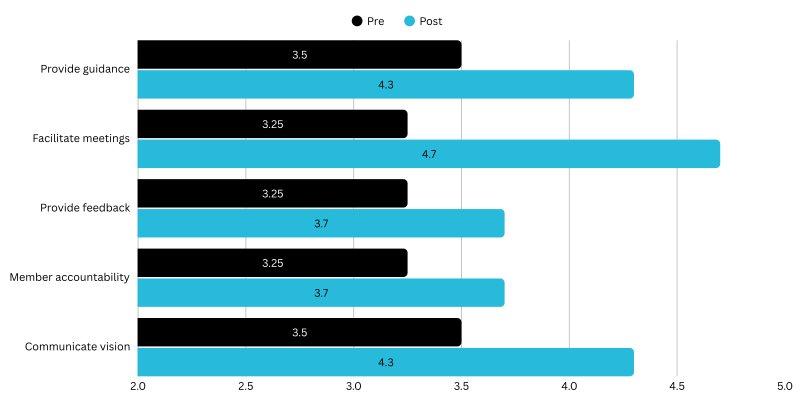
BOP executive board members perceived learning in all five intended outcomes. They showed the greatest rate of learning in their ability to facilitate organized and impactful meetings (hone interpersonal communication skills), provide on-going, individualized guidance to members of the Board of Programmers (BOP) (identify opportunities to empower others to succeed), and develop and communicate vision for BOP (discern and apply personal values in decision-making).
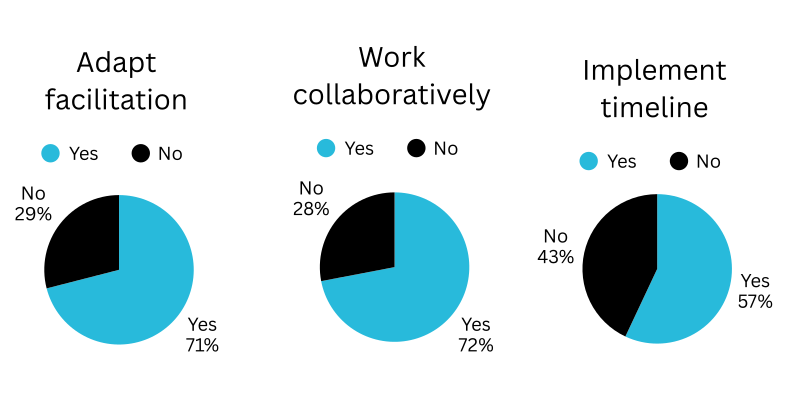
BOP Executive board members demonstrated learning at a rate of at least 67% for the five intended outcomes. The greatest rate of learning was in their ability to provide on-going, individualized guidance to members of the Board of Programmers (identify opportunities to empower others to succeed) and facilitate organized and impactful BOP meetings (hone interpersonal skills). The lowest demonstrated rate of learning was in their ability to hold member of BOP accountable for facilitating their events and attending events of other members.
Board of Programmers – Member
I made sure to stay calm, stay in communication with higher ups, and make sure efforts are acknowledged despite setbacks.
The Board of Programmers (BOP) is the primary student event planning club at Providence College. They plan around 100 events a year for the student body. They are comprised of around 50 members which are divided into one executive committee with 8 other smaller committees. The Board of Programmers helps students immerse themselves into campus life and creates a more connected community through fun and diverse events that seek to serve all students at PC.
BOP member is a Tier 2 leadership development program. Tier 2 leadership programs allow students to hone leadership skills through practice.
Learning outcomes for Board of Programmers Executive Board members include:
- Implement an effective timeline to market, order supplies, and stay on budget for events
- Provide clear direction for BOP members and staff during events you are facilitating
- Adapt facilitation of an event when challenges occur
- Take feedback from BOP exec, committee chair and PC students to provide creative and timely programs that match student interest
- Work as a collaborative member of a committee and all of BOP to ensure the success of committee events and large-scale programs
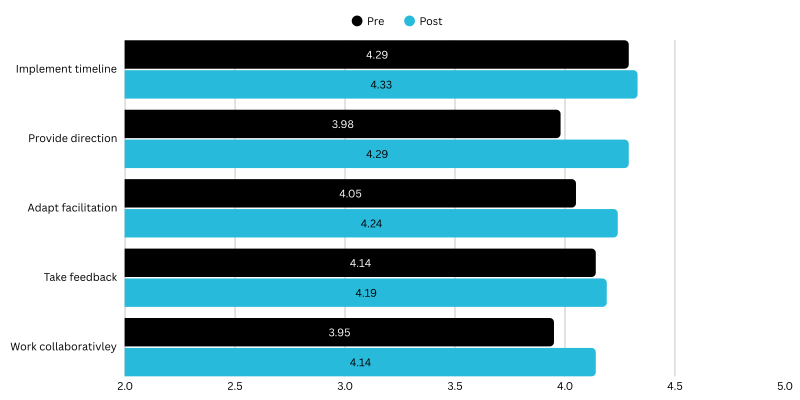
BOP members perceived learning in all five intended outcomes. They showed the greatest rate of learning in their ability to provide clear direction for BOP members and staff during events they are facilitating (hone interpersonal communication skills) and adapt facilitation of an event when challenges occur (learn conflict resolution skills).
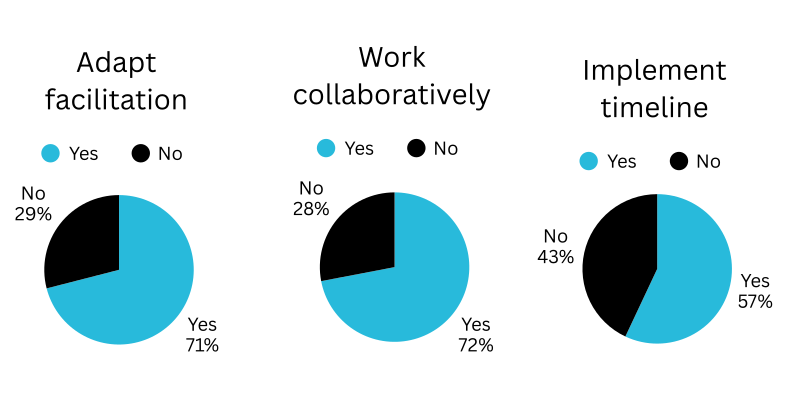
BOP members demonstrated learning at a rate of at least 70% in four of five intended outcomes. The greatest rate of learning was work as a collaborative member of a committee and all of BOP to ensure the success of committee events and large-scale programs (identify opportunities to empower others to succeed). The lowest rate of learning was implement an effective timeline to market, order supplies, and stay on budget for events (hone interpersonal communication skills).
Emerging Leaders
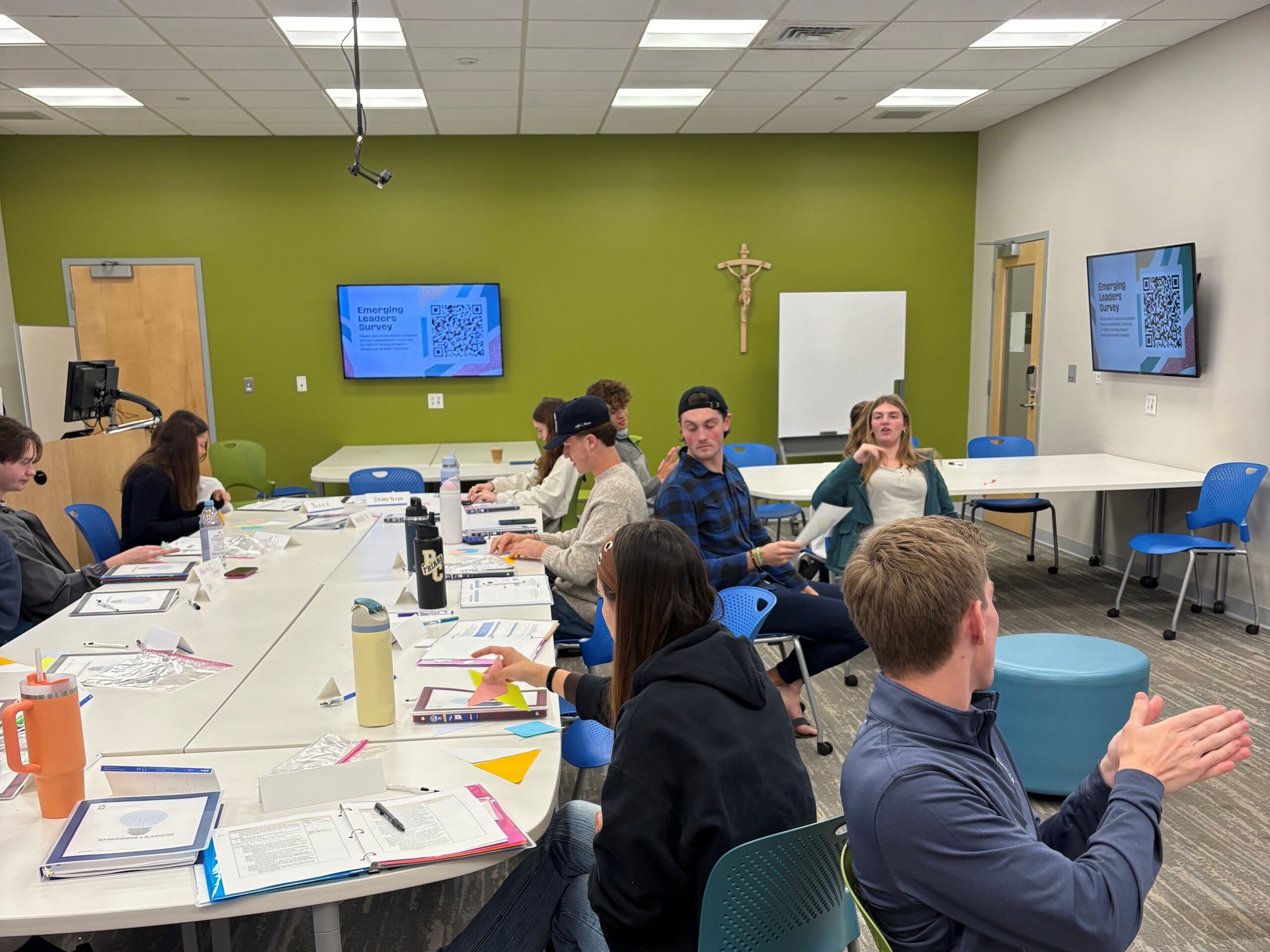
Emerging leaders taught me to slow down and look at the problem, to use my resources to solve the problem, and that working with other people is usually more effective than working alone.
Emerging Leaders offers students the opportunity to develop as leaders during their first year at Providence College. Emerging Leaders develops students’ understanding of leadership through a six week workshop series which guides students through a variety of leadership engagement opportunities. Emerging Leaders are self-motivated, growth-minded individuals seeking opportunities to develop their leadership skills and create community.
The Emerging Leaders Program is a Tier 1 leadership development program. Tier 1 leadership programs allow students to explore foundational leadership concepts.
Learning outcomes for Emerging Leaders include:
- Identify and define personal values.
- Use communication skills to effectively solve a problem.
- Reflect on the strengths and weaknesses of your personal approach to taking risks.
- Understand what steps can be taken to resolve a conflict.
- Identify your self-care values and how they support your resiliency.
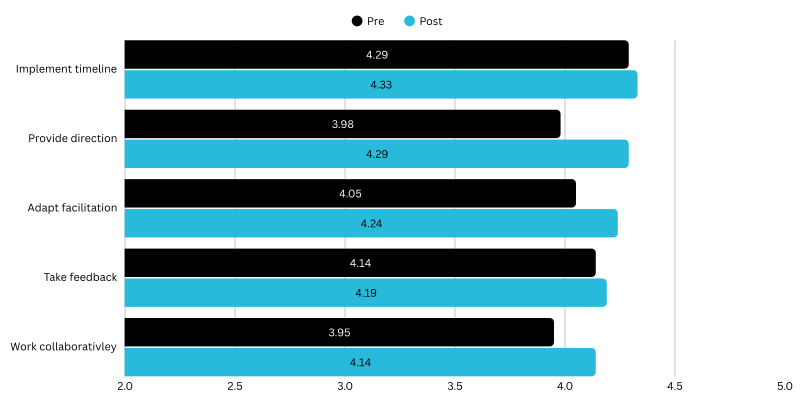
Emerging leaders perceived learning in all five intended outcomes. They showed the greatest rate of learning in reflect on the strengths and weaknesses of your personal approach to taking risks (learning conflict resolution skills) and understand what steps can be taken to resolve a conflict (conflict resolution skills).
Emerging Leaders demonstrated learning at a rate of at least 78% in all five intended outcomes. The greatest rate of learning was identify and define personal values (discern and apply personal values in decision making) and identify your self-care values and how they support your resiliency (craft strategies for ongoing self-reflection). The lowest rate of learning was use communication skills to effectively solve a problem (hone interpersonal communication skills).
Fall Orientation Leader
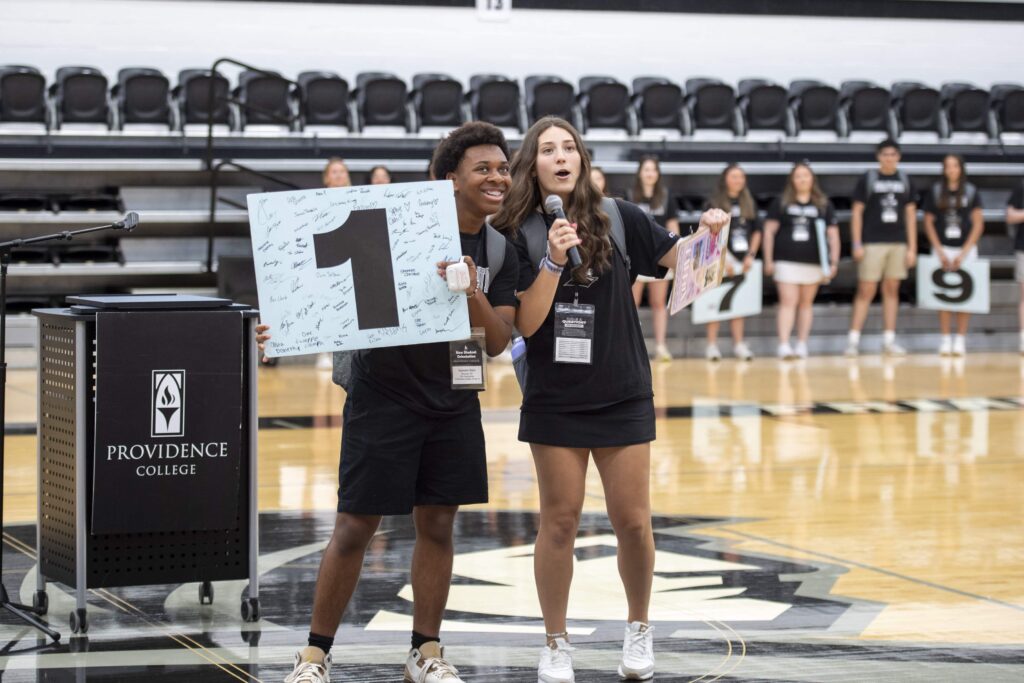
I was able to have open and honest conversations with my students about feeling isolated and put myself in their shoes by asking questions, validating their feelings and also just listening to them.
Fall Orientation Leaders serve incoming new students during the Fall Orientation program. OLs provide an energic and welcoming first experience for freshman and transfer students by leading small groups, providing insight into the academic experience, and developing impactful connections.
Fall Orientation Leader is a Tier 2 leadership development program. Tier 2 leadership programs allow students to hone leadership skills through practice.
Learning outcomes for Fall Orientation Leaders include:
- Facilitate impactful small group conversations
- Connect new students to PC resources
- Understand experiences & perspectives of others
- Identify how to utilize Clifton Strengths
- Be adaptable in a fast-paced environment
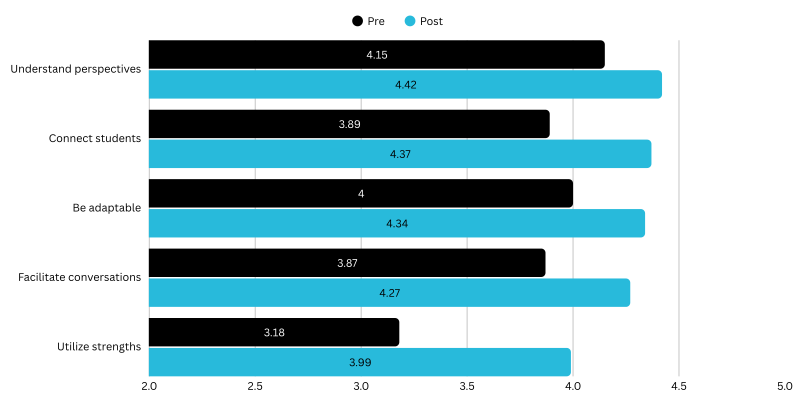
Fall Orientation Leaders perceived learning in all five intended outcomes. They showed the greatest rate of learning in identify how to utilize their Clifton Strengths (gain an understanding of their Clifton Strengths) and Connect new students to Providence College resources (identity opportunities to empower others to succeed).
Fall Orientation Leaders demonstrated learning at a rate of at least 77% in four of five intended outcomes. The greatest rate of learning was understand experiences & perspectives of others (establish and facilitate communities of belonging) and connect new students to providence College resources (identify opportunities to empower others to succeed). The lowest rate of learning was be adaptable in a fast paced environment (learn conflict resolution skills).
Head Resident Assistant
Having my central focus be on my staff, I worked hard to make sure they had all the tools they needed to succeed and felt supported from me as people first and then RAs second.
Head Resident Assistants provide support and mentorship to Resident Assistants (RA). They contribute to the creation of the duty schedule, assist in training sessions/RA onboarding, plan programs for residents, partner with departments to promote campus-wide programs and advise hall councils.
Head Resident Assistants are a Tier 3 leadership development program. Tier 3 leadership programs allow students to apply leadership skills in high impact experiences.
Learning outcomes for Head Resident Assistants include:
- Collaborate with campus partners and peers to provide campus-wide educational programming
- Provide training and on-going guidance to Resident Assistants (RA)
- Provide programming that meets the unique needs of assigned residents
- Manage Resident Assistant (RA) staff dynamics
- Advocate for the needs of residents and Resident Assistants (RA) to Residence Life professional staff
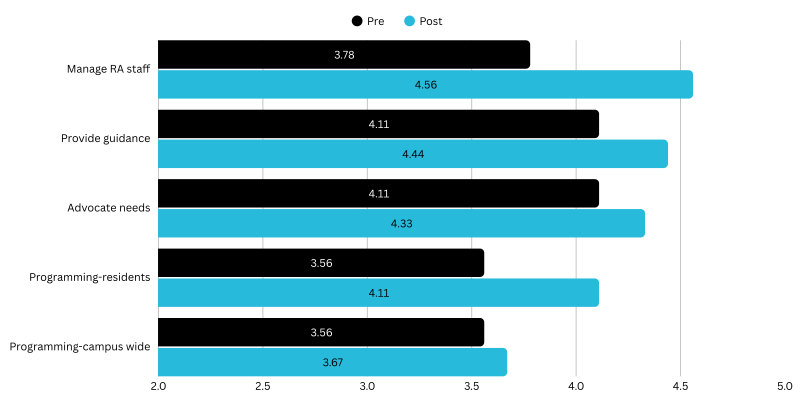
Head Resident Assistants perceived learning in all five intended outcomes. They showed the greatest rate of learning in manage Resident Assistant (RA) staff dynamics (learn conflict resolution skills) and provide programming that meets the unique needs of assigned residents (establish and facilitate communities of belonging).
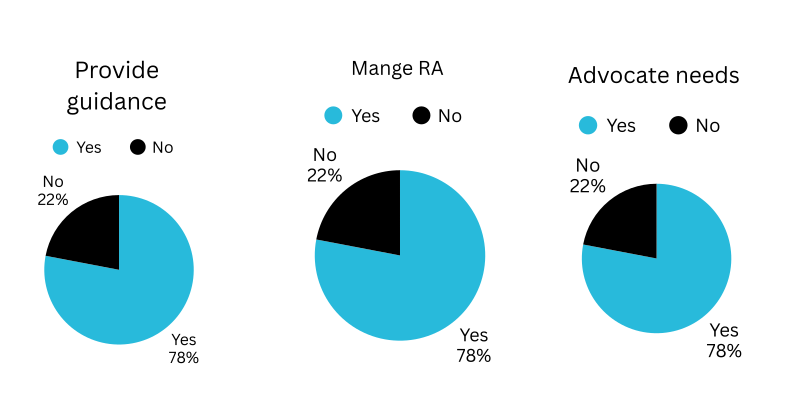
Head Resident Assistants demonstrated learning at a rate of 78% in all five intended outcomes. Rates of learning were consistent for all five learning outcomes.
Horizons Mentor
I engaged in ongoing reflection by evaluating how my actions and decisions aligned with my values, especially in how I supported and communicated with my mentee. I became more aware of my identity and how it shapes the way I lead.
Horizons empowers first-year students with tools that help them acclimate to campus while maintaining their identity and cultural values. Mentors guide new students to build relationships with peers, develop cultural agility and create a network of support.
Horizons Mentor is a Tier 2 leadership development program. Tier 2 leadership programs allow students to hone leadership skills through practice.
Learning outcomes for Horizons Mentors include:
- Engage in ongoing reflection around identity and personal values
- Engage in active and empathetic listening
- Identify resources and practical solutions to challenges mentee is facing
- Connect mentee with leadership/engagement opportunities that fit their strengths and interests
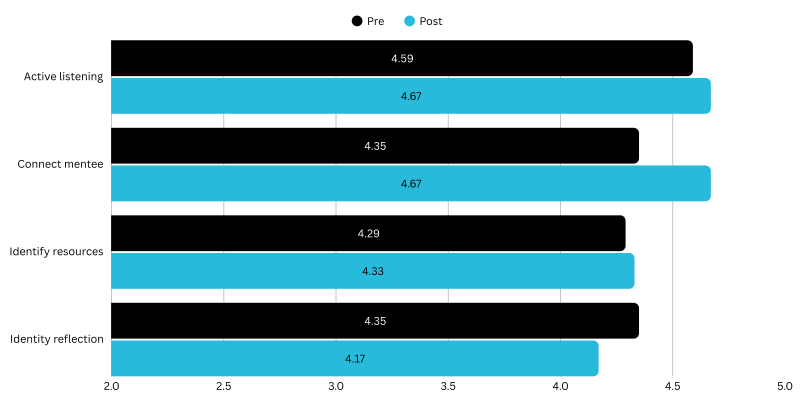
Horizons Mentors perceived learning in four of five intended outcomes. They showed the greatest rate of learning in their ability to connect mentee with leadership/engagement opportunities with their strengths and interests (identify opportunities to empower others) and their ability to engage in active and empathetic listening (hone interpersonal communication skills).
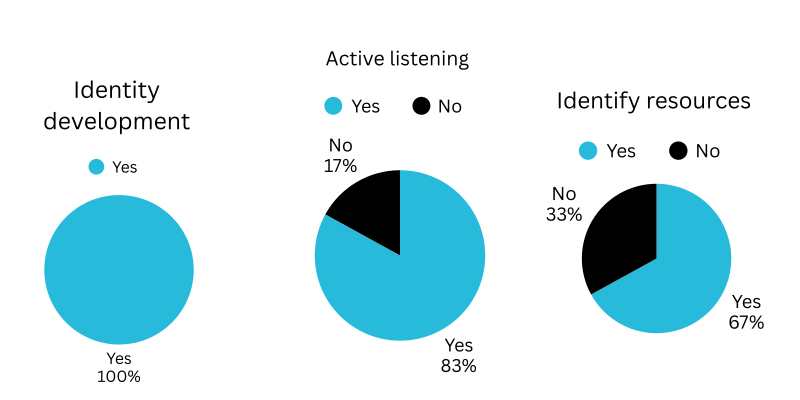
Horizons Mentors demonstrated learning at a rate of at least 83% in three of four intended outcomes. The greatest rate of learning engage in ongoing reflection around identity and personal values (establish and facilitate communities of belonging) and engage in active and empathetic listening (hone interpersonal communication skills). The lowest rate of learning was identify resources and practical solutions to challenges mentee is facing (learn conflict resolution skills).
Leadership Fellows Program Companion

Leading others to becoming better leaders has helped me to reflect on my own skills and shortcomings. I have learned so much from my group this year.
The Leadership Fellows Program (LFP) provides a space for emerging and experienced student leaders to develop critical skills through dialogue, contemplation, and mindfulness. LFP is a cohort experience. Companions (student mentors) guide a group of 8-12 students through a series of eight engaging workshops and two formational leadership events throughout the academic year they spend as a fellow. Companions receive training, attend pre-workshop meetings and lead a leadership workshop during the annual retreat.
Leadership Fellows Program (LFP) Companion is a Tier 2 leadership development program. Tier 2 leadership programs allow students to hone leadership skills through practice.
Learning outcomes for LFP Companions include:
- Facilitate small group discussion that leads to vulnerable and authentic dialogue
- Understand and utilize Clifton Strengths
- Engage in ongoing reflection around your personal values and life purpose
- Facilitate an impactful leadership-related workshop
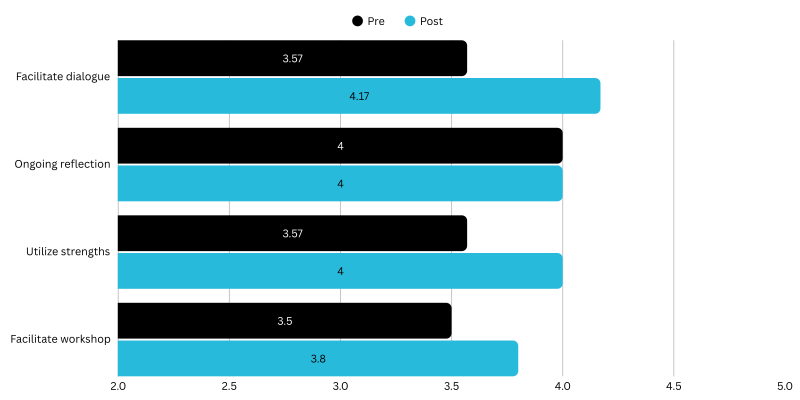
LFP Companions perceived learning in three of four intended outcomes. They showed the greatest rate of learning in their ability to facilitate small group discussion that leads to vulnerable and authentic dialogue (establish and facilitate communities of belonging) and understand and utilize their Clifton Strengths (gain an understanding of their Clifton Strengths).
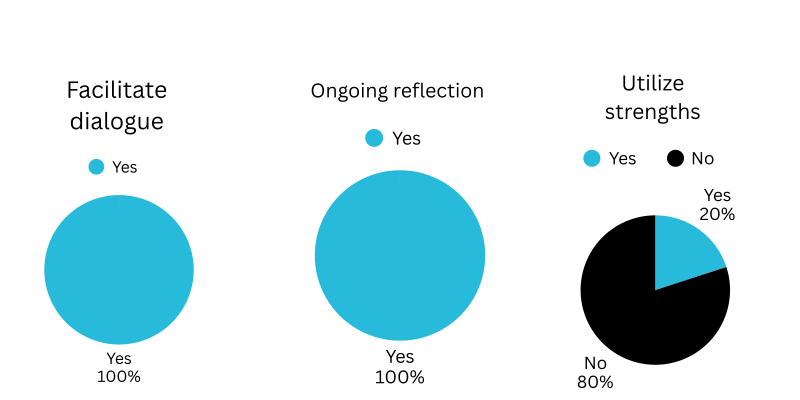
LFP Companions demonstrated learning at a rate of at least 83% in three of four intended outcomes. The greatest rate of learning was in their ability to facilitate small group discussion that leads to vulnerable and authentic dialogue (establish and facilitate communities of belonging) and their ability to engage in ongoing reflection around personal values and life purpose (craft strategies for ongoing self-reflection). Their lowest rate of learning was their ability to understand and utilize Clifton Strengths (gain an understanding of their Clifton Strengths).
Leadership Fellows Program Fellow
I realized that my fears of my self worth and my fears of what people would think about me ultimately holds me back. LFP helped me find my life purpose of helping others that experience the same feelings as me.
LFP Fellow is a Tier 1 leadership development program. Tier 1 leadership programs allow students to explore foundational leadership concepts.
Learning outcomes for LFP Companions include:
- Explore individual passions and life purpose
- Display vulnerability through authentic dialogue
- Engage in active and empathetic listening
- Display leadership outside of positions of authority
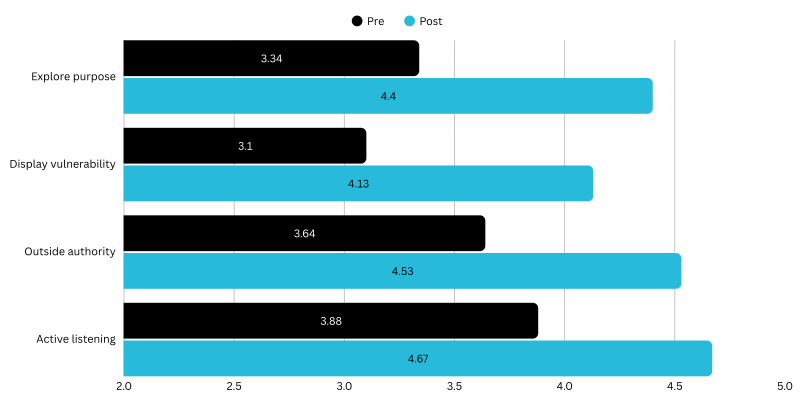
LFP Fellows perceived learning in all four intended outcomes. They showed the greatest rate of learning in their ability to explore individual passions and life purpose (craft strategies for ongoing self-reflection) and display vulnerability through authentic dialogue (hone interpersonal communication skills).
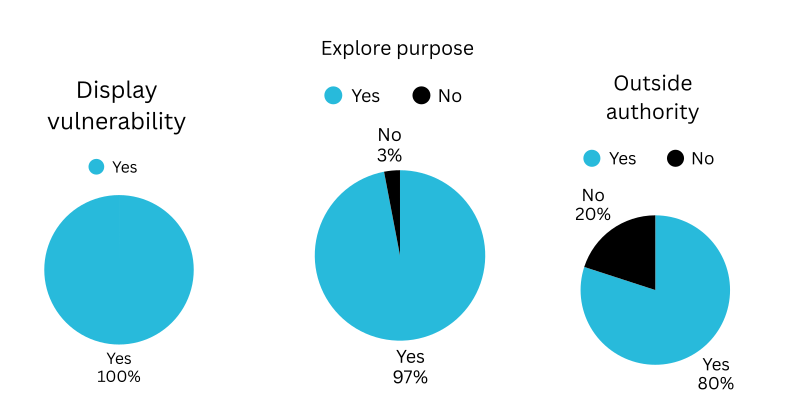
LPF Fellows demonstrated learning at a rate of at least 80% in all four intended outcomes. The greatest rate of learning was in their ability to display vulnerability through authentic dialogue (hone interpersonal communication skills) and their ability to explore individual passions and life purpose (craft strategies for ongoing self-reflection). Their lowest rate of learning was their ability to display leadership outside of positions of authority (discern and apply personal values in decision-making).
Student Learning, by Outcome
The leadership curriculum has seven intended learning outcomes. Student learning is consistent across all learning outcomes, demonstrating the breadth of learning students experience.
Craft strategies for ongoing self-reflection
Four skills being measured, from three programs, correspond with the learning outcome of craft strategies for ongoing self-reflection. The skills are:
- Explore individual passions and life purpose (LFP Fellow)
- Identify and define personal values (Emerging Leaders)
- Identify your self-care values and how they support your resiliency (Emerging Leaders)
- Engage in ongoing reflection around your personal values and life purpose (LFP Companion)
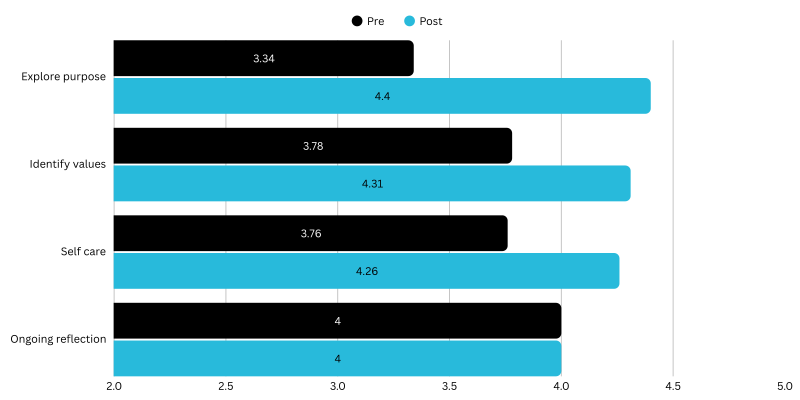
Perceived learning was achieved in three of the four skills being measured that correspond with this learning outcome.
Discern and apply personal values in decision-making
Two skills being measured, from two programs, correspond with the learning outcome of discern and apply personal values in decision-making
- Display leadership outside of positions of authority (LFP Fellow)
- Develop and communicate vision for BOP (BOP Executive Board Member)
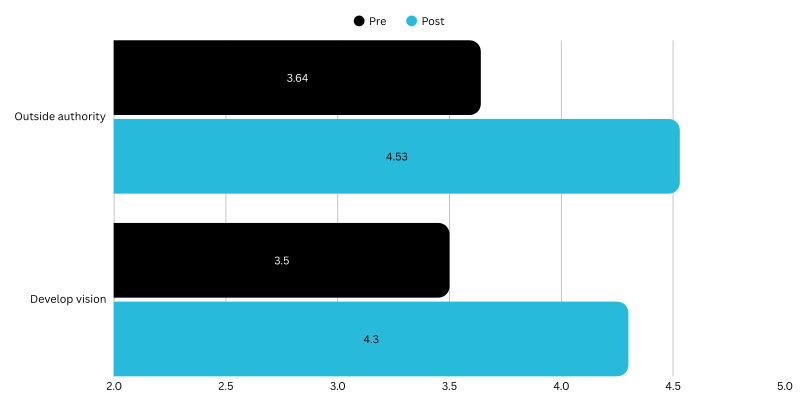
Perceived learning was achieved in both of the skills being measured that correspond with this learning outcome.
Establish and facilitate communities of belonging
Six skills being measured, from five programs, correspond with the learning outcome of establish and facilitate communities of belonging.
- Engage in active and empathetic listening (LFP Fellow)
- Understand experiences & perspectives of others (Fall Orientation Leader)
- Collaborate with campus partners and peers to provide campus-wide educational programming (Head Resident Assistant)
- Provide programming that meets the unique needs of assigned residents (Head Resident Assistant)
- Engage in ongoing reflection around identity and personal values (Horizons Mentor)
- Facilitate small group discussion that leads to vulnerable and authentic dialogue (LFP Companion)
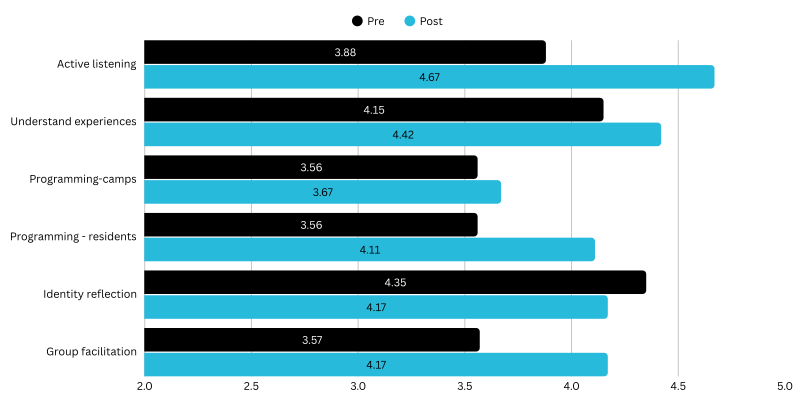
Perceived learning was achieved in five of the six skills being measured that correspond with this learning outcome.
Gain an understanding of their Clifton Strengths
Two skills being measured, from two programs, correspond with the learning outcome of gain an understanding of their Clifton Strengths.
- Identify how to utilize their Clifton Strengths (Fall Orientation Leader)
- Understand and utilize Clifton Strengths (LFP Companion)
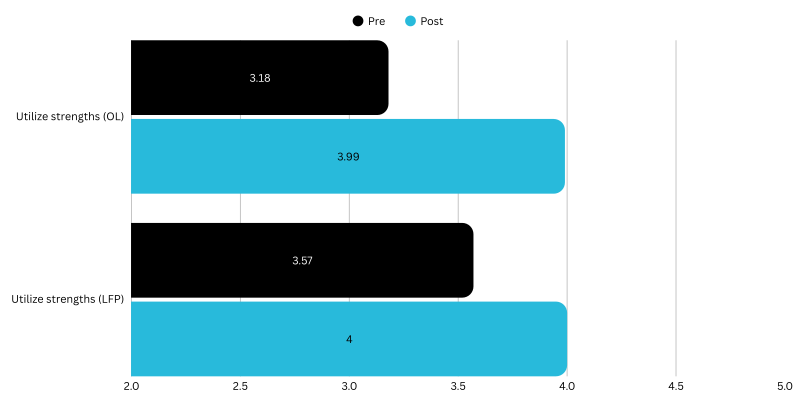
Perceived learning was achieved in both of the skills being measured that correspond with this learning outcome.
Hone interpersonal communication skills
Eleven skills being measured, from all eight programs, correspond with the learning outcome of hone interpersonal communication skills.
- Display vulnerability through authentic dialogue (LFP Fellow)
- Facilitate organized and impactful BOP meetings (BOP Executive Board member)
- Give members of BOP actionable feedback on their programming (BOP Executive Board member)
- Implement an effective timeline to market, order supplies, and stay on budget for events (BOP Member)
- Provide clear direction for BOP members and staff during events you are facilitating (BOP Member)
- Take feedback from BOP exec, committee chair and PC students to provide creative and timely programs that match student interest (BOP Member)
- Use communication skills to effectively solve a problem (Emerging Leaders)
- Facilitate impactful small group conversations (Fall Orientation Leader)
- Advocate for the needs of residents and Resident Assistants to Residence Life professional staff (Head Resident Assistant)
- Engage in active and empathetic listening (Horizons Mentor)
- Facilitate an impactful leadership-related workshop (LFP Companion)
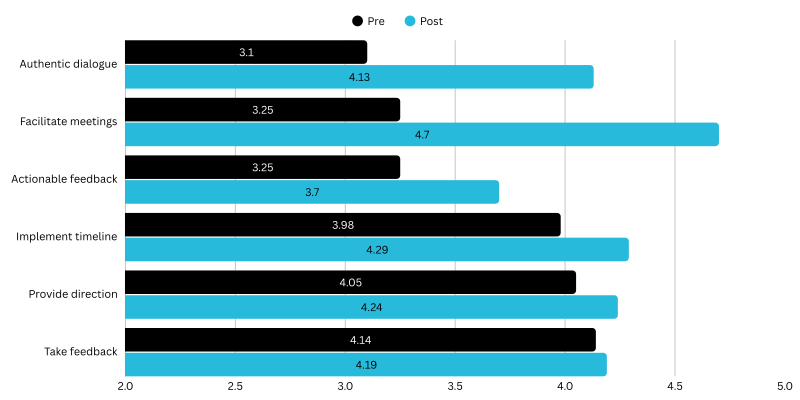
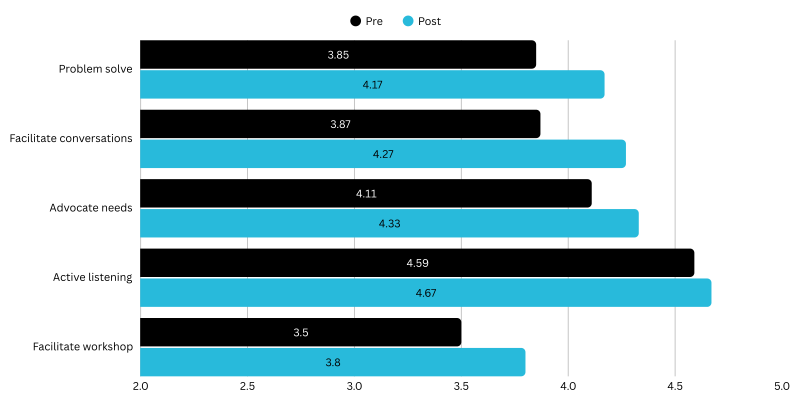
Perceived learning was achieved in all eleven of the skills being measured that correspond with this learning outcome.
Identify opportunities to empower others to succeed
Five skills being measured, from five programs, correspond with the learning outcome of identify oppurtunities to empower others to succeed.
- Provide on-going, individualized guidance to members of the Board of Programmers (BOP Executive Board member)
- Work as a collaborative member of a committee and all of BOP to ensure the success of committee events and large-scale programs (BOP member)
- Connect new students to PC resources (Fall Orientation Leader)
- Provide training and on-going guidance to Resident Assistants (Head Resident Assistant)
- Connect mentee with leadership/engagement opportunities that fit their strengths and interests (Horizons Mentor)
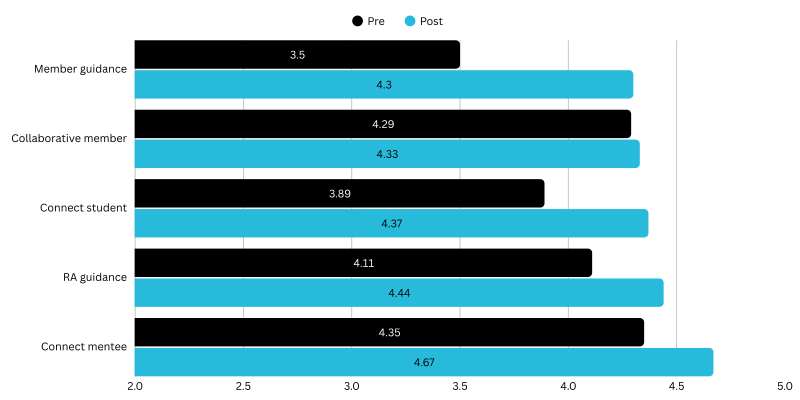
Perceived learning was achieved in all five of the skills being measured that correspond with this learning outcome.
Learn conflict resolution skills
Seven skills being measured, from six programs, correspond with the learning outcome of learn conflict resolution skills.
- Hold members of BOP accountable for facilitating their events and attending the events of other members (BOP Executive Board member)
- Adapt facilitation of an event when challenges occur (BOP member)
- Reflect on the strengths and weaknesses of your personal approach to taking risks (Emerging Leaders)
- Understand what steps can be taken to resolve a conflict (Emerging Leaders)
- Be adaptable in a fast-paced environment (Fall Orientation Leader)
- Manage Resident Assistant (RA) staff dynamics (Head Resident Assistant)
- Identify resources and practical solutions to challenges mentee is facing (Horizons Mentor)
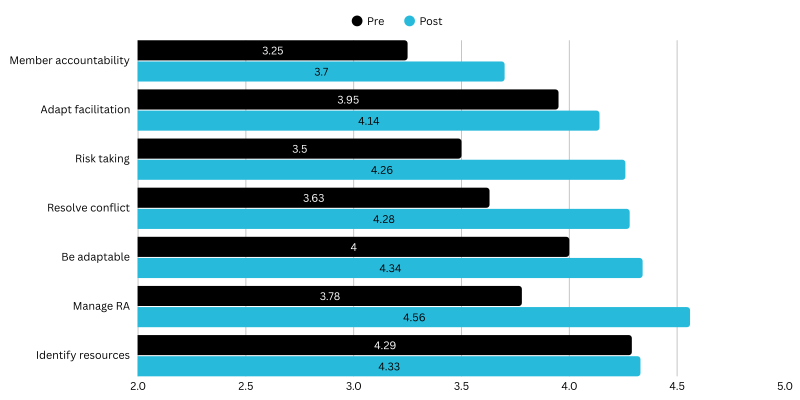
Perceived learning was achieved in all seven of the skills being measured that correspond with this learning outcome.
Questions about the Leadership Curriculum or this report can be sent to Matt Hicks mhicks@providence.edu